
Yugo-Zapadnaya
- This object in Internet: Wiki, Wikimapia, карта Yandex
- Opened: December 26, 2025
- Station depth: 56m
- Project title: Kazakovskaya
- Type of station: pylon with three arches
- Entrance to the station: from the ground pavilion
The name of the station ("Southwest") is associated with its location in the historical residential area of Saint-Petersburg - in the Southwest. The stated theme of the station's design is the history of Krasny Selo ("Red Village", a satellite city to the south of this area) and its surroundings. Looking ahead, I didn't notice any connection and almost no design :)
Explanation for foreigners. In Russian, the word "red" until the very beginning of the 20th century had the meaning not only of "red", but also of "beautiful". So the correct translation of the name of this satellite city into enemy languages will sound like "Beautiful Village" :)
The station is also equipped with doors on the side platforms, similar to the stations of the "horizontal elevator" type. This is what the design pictures looked like.


And here's what happened in fact.


The station turned out to be bright and beautiful. And almost indistinguishable from its neighbor - Putilovskaya. The reflections in the floor are excellent.


As usual, there are decorative grilles and a door to the service rooms at one end of the central hall.


At the other end, of course, there are escalators and a vertical hermetic door of the "guillotine" type.


It is interesting, by the way, that the benches in the central hall and on the side platforms are of completely different designs. It was as if different architects had painted.


Just like at the "sister station" Putilovskaya, reflections in the side windows make it very difficult to see the arrival of the train.


I don't really understand why they put these sliding doors on platforms, if their economic inexpediency was calculated back in the USSR. They consume electricity, consume the resources of the repair technicians, and require extremely precise, centimeter-by-centimeter, train stops. But obviously the big uncles know better.


If you stick your face between the station doors and the train doors, when they are open, of course, you can see that the entire transit space between the doors is closely monitored by two control cameras. There they are, from above.

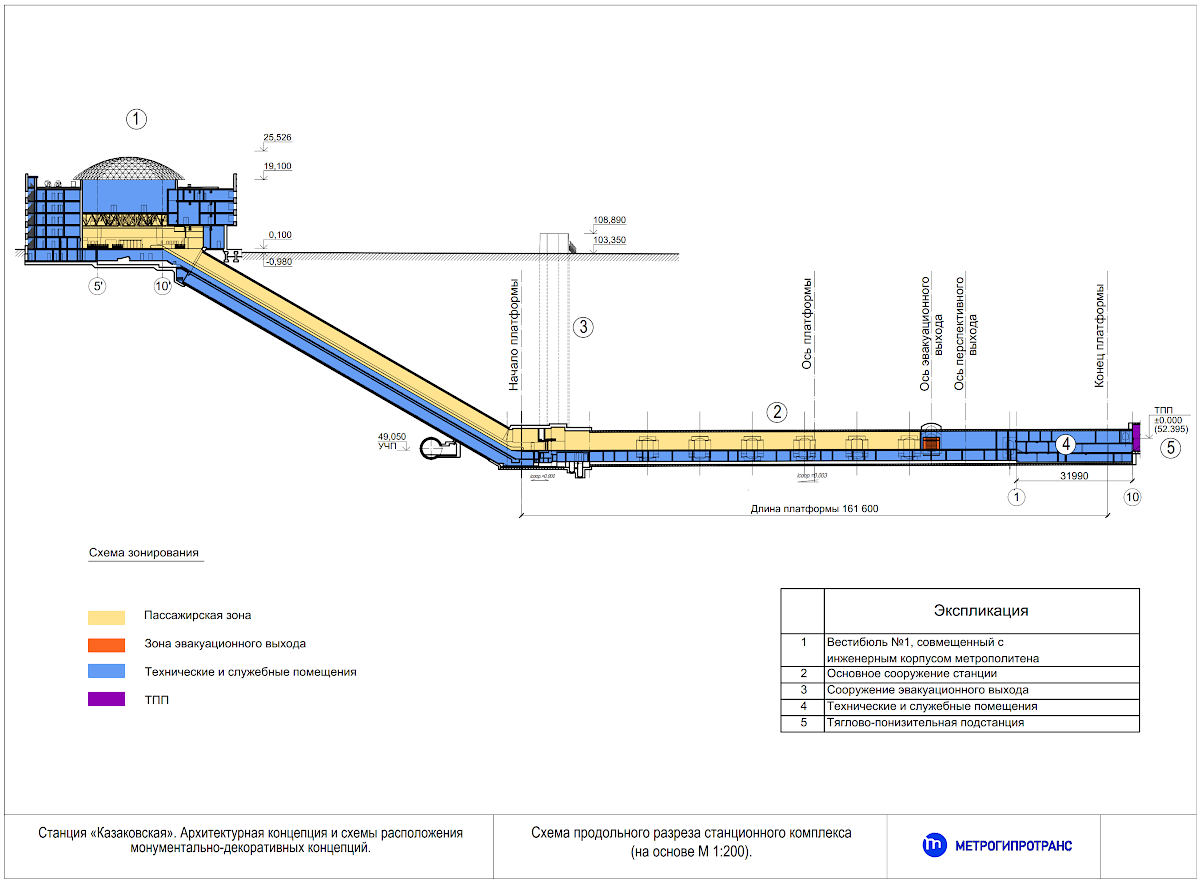
Otherwise, the station's structure is a typical pylon.


As it was written in the design decision, the main focus of the station's design is on the central hall of the platform. The walls of the station are lined with white marble. The dynamism of the space is given by the framing of the aisles in the form of structural arches with integrated LED lights in them. The set rhythm is maintained in the platform lining by alternating gray granite with red inserts in the passageways to the landing platforms. A cornice runs along the entire station, behind which the LED lighting of the station's vault is located.
The color scheme is monochrome with bright accents. Natural stone is used in the decoration. Granite in light gray and gray tones with dark red inserts accentuated the floors. The walls are lined with white marble. The ceilings, arches of the station and the inclined passage are made of aluminum panels with honeycomb filling with a predominance of white color with steel—colored inserts of structural arches in combination with a rack-and-pinion ceiling.


Moreover, if you shoot with the white balance set to the color temperature of the LED lights (4000 kelvin), then the perception is completely different.


Let's see what we have at the top. We pass through the hermetic door. The lights on the escalator are exactly the same as at the next station Putilovskaya.


We're going up.


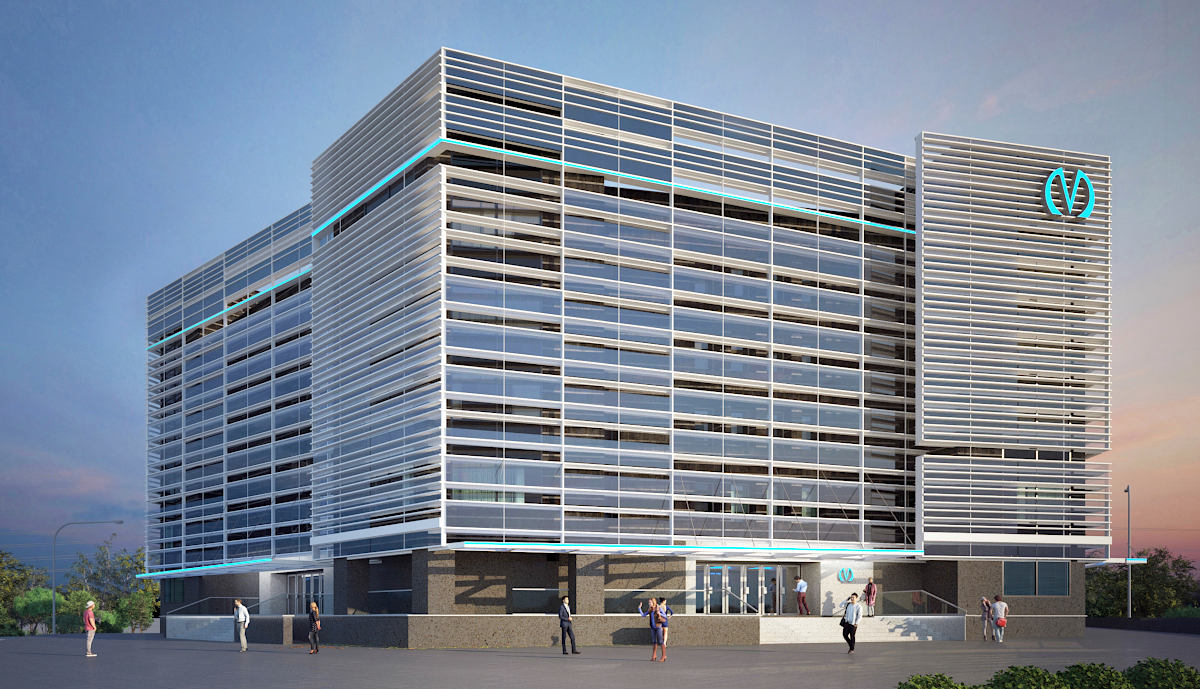
The following was written about the lobby building in the design decision. The lobby building, in a single volume with the building of the administrative building of the metro, is hexagonal with an internal atrium and a translucent dome. The ground floor of the building, porches, ramps and parapets are lined with granite. The entrance groups are accentuated by portals lined with light stone, as well as lighting fixtures built into the canopies. The interiors of the station are made in metal and natural stone.
The ticket hall of the lobby with an escalator on the ground floor of the building is a two-light space repeating the hexagonal shape of the building. The ceiling pattern is subordinated to the hexagonal shape of the hall, the built-in lamps radiate from the center to the corners. The escalator slope is accentuated by a decorative illuminated stained glass window located above it. The floor pattern reflects the dynamics of passenger movement.

What it looks like in fact.


The ceiling lamp is beautiful. However, according to the project description, there is no relation to Krasny Selo.


Let's look at the building from the outside. It looks like an office center with a metro station on the ground floor. This is now the metro office center.


The station was decorated for the opening and the New Year from the heart. I remind you, it's just been opened.


Well, there's absolutely nothing else to see here. Southwestern Harlem, widely known in narrow circles, is surrounded on three sides. Let's go back downstairs.


Above the escalator, you can see the only decoration that somehow correlates not even with the Krasny Selo, but simply with the countryside. Down, everybody down.


I must say that these goose-like lights look quite epic when going down. At the bottom of the escalator, you can see the cornice lighting on the sides of the passage.


What to say. The station turned out to be pretty, but extremely utilitarian. In a residential area, of course. There are no decorations, and there is absolutely nothing to do here.


Is it worth coming here on purpose? Definitely not. Moreover, Harlem directly implies large crowds of people-penguins, in the morning in one direction, in the evening in the other.


Well, there are also complete drawings of the station. If someone needs them, of course :)